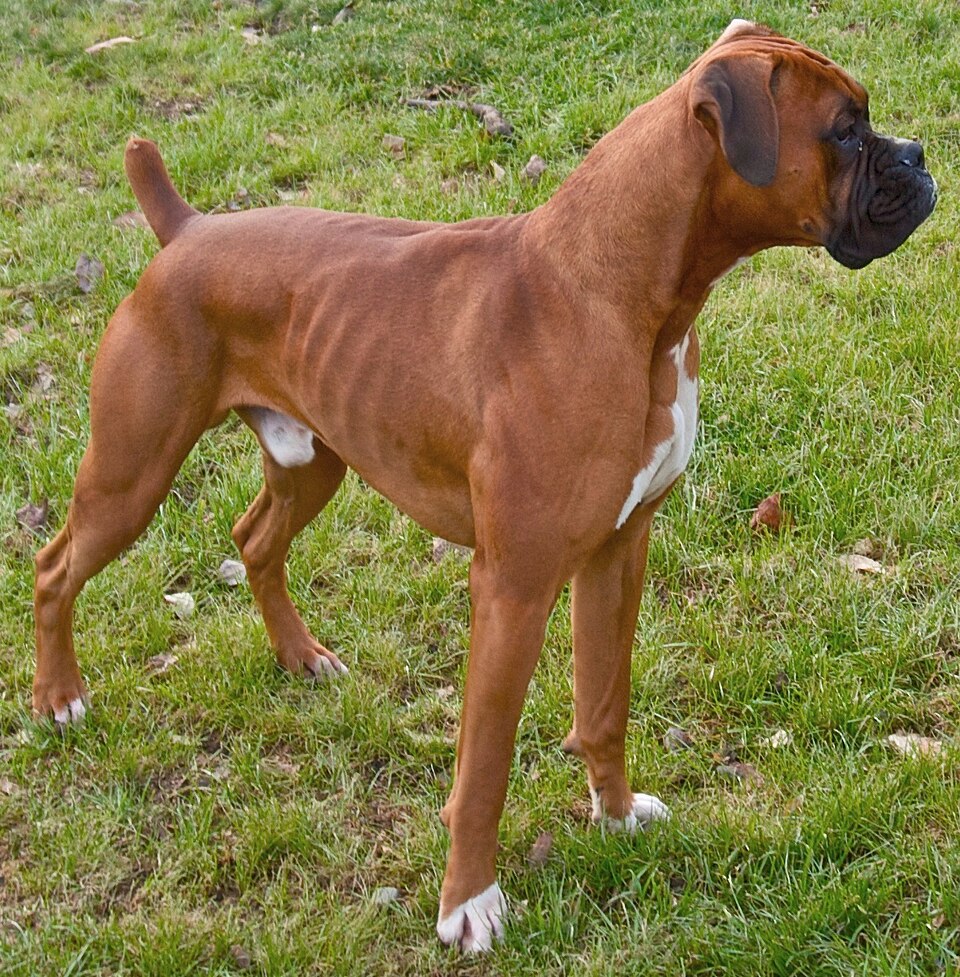
About the Boxer
The Boxer was developed in Germany in the late 1800s from two older breeds — the now-extinct Bullenbeisser and the English Bulldog. They were bred as working dogs: guarding, herding, and cart-pulling. Their name likely comes from their habit of using their front paws like boxers when playing.
Boxers served in both World Wars as messengers, guard dogs, and pack carriers. Today they're popular family dogs known for their playful energy and protective instincts.
Temperament and personality
Boxers are famously called the "Peter Pan" of dog breeds — they stay puppy-like well into adulthood. They're playful, curious, and endlessly loyal to their families. They love children and are generally good with other pets if properly socialized.
- Playful: Endless energy and a love of games.
- Loyal: Deeply bonded to their families.
- Protective: Natural watchdogs with a serious bark.
- Patient: Great with kids when raised with them.
Size and appearance
Boxers stand 21–25 inches tall and weigh 50–80 pounds. They have a short, smooth coat in fawn or brindle, often with white markings. Their square muzzle, deep chest, and athletic build give them their trademark powerful look.
They shed moderately year-round and are prone to drooling.
Exercise and care
Boxers need at least 60–90 minutes of daily exercise. They love running, fetch, and interactive play. Without enough activity, they can become destructive.
Health-wise, Boxers are prone to heart conditions (especially cardiomyopathy), hip dysplasia, and certain cancers. Their flat faces mean they also overheat easily in hot weather.
Is a Boxer right for you?
Boxers are ideal if you're active, want a playful companion, and have time for daily exercise and training. They're not ideal for people who work long hours away from home or who want a low-energy dog.
Naming your Boxer
Boxers suit fun, punchy names — think Rocky, Bruno, Rosie, or Duke. Try our generator to browse by vibe.