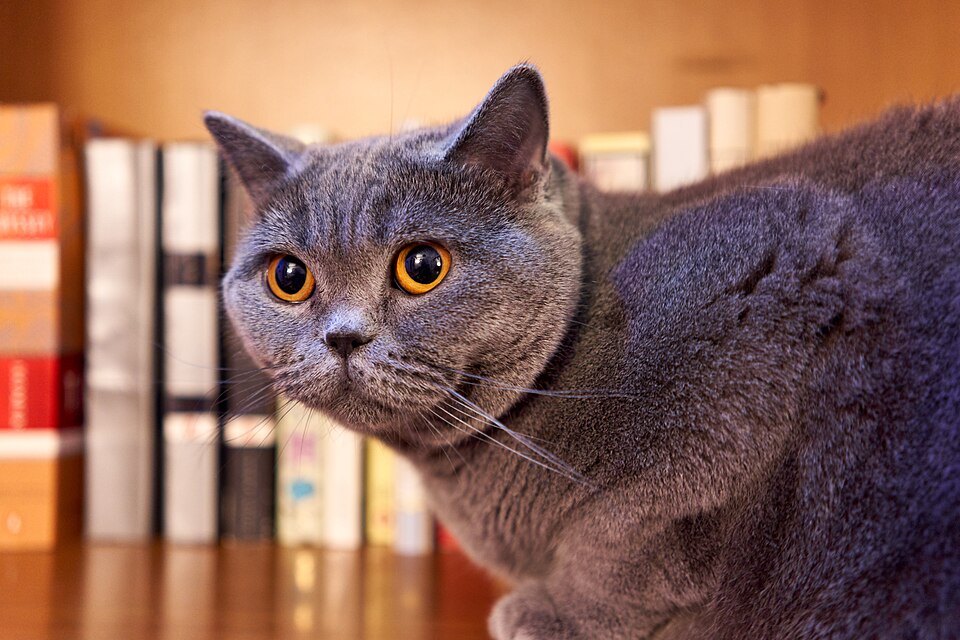
About the British Shorthair
The British Shorthair is one of the oldest English cat breeds, descended from cats brought to Britain by the Romans nearly 2,000 years ago. They were originally working cats — kept in homes and businesses to control rodents — but were refined into a show breed in the late 1800s.
Their most iconic color is "British Blue" — a solid blue-gray coat — but they come in dozens of colors and patterns. Their round face, chunky build, and plush coat give them a distinctly teddy-bear appearance.
Temperament and personality
British Shorthairs are famously easygoing, independent, and undemanding. They're affectionate on their own terms — they'll happily sit near you for hours but rarely demand to be held. This makes them a great choice for people who want a companion without clinginess.
- Calm: Rarely jump, climb, or cause chaos.
- Independent: Happy alone for stretches of the day.
- Affectionate: Loyal but not needy.
- Quiet: Rarely vocal except around mealtimes.
Size and appearance
British Shorthairs are stocky, muscular cats that stand 12–14 inches tall and weigh 9–17 pounds. They have a round head, full cheeks, small ears, short legs, and a dense, plush coat. They mature slowly — up to 3 years to reach full size.
Care and grooming
Their dense coat needs weekly brushing to remove loose hair and prevent mats. They shed moderately year-round, with heavier shedding in spring and fall.
Health-wise, they're prone to hypertrophic cardiomyopathy (HCM) and polycystic kidney disease (PKD). Reputable breeders screen for these.
Is a British Shorthair right for you?
British Shorthairs are ideal if you want a calm, independent, low-maintenance companion and don't need a cat that's constantly in your lap. They're not ideal for people who want an interactive, dog-like cat.
Naming your British Shorthair
British Shorthairs suit distinguished, classic names — think Winston, Churchill, Poppy, or Oliver. Try our generator to browse by vibe.